Monday, February 18, 2013

Exam 2013: Exam v/s Food.


Exam time has almost arrived and every parent wishes to help their children stay physically and mentally healthy throughout this time.

Why eat breakfast?
Children should never skip breakfast as it causes lack of concentration in studies and weak memory. This meal is very important since it meet the needs of breaking the fast of 7 to 8 hours of sleep.
Breakfast can include oats, wheat flakes, milk, stuffed vegetable or panner chapattis with curd or sandwiches, egg or sprouts or idli. Avoid butter, ghee, cheese, and other oily foods.

Reason: These foods contain high level of protein that activates neurotransmitters and stimulates memory.

Why fruits and vegetables?
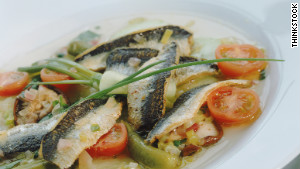
The best diet food during exams is lots of fresh foods such as fresh fruits, vegetables, nuts, sprouted pulses, fish and egg.

Reason: These foods help to activate memory by stimulating the release of neurotransmitters, brain chemicals involved in receiving, processing, storing, and accessing information optimally which are needed most during exams.

What to drink?
It would be good to have health drinks or soya drink instead of tea and coffee since tea and coffee are stimulants and cause sleep disturbance, muscular tension, anxiety. Also a few crushed almonds blended with milk or fresh fruit juices can add as energy drinks.
The best liquid to drink before and during an exam is water as it speeds up brain function.

What to do for physical fitness?
Eat a light meal if you plan to stay awake throughout the night. Also avoid oily or fried snacks as they will make you sleepy.
Remember gentle walking, swimming, jogging, cycling and jumping supports memory function and help in reducing the stress level.

What are worst foods?
The worst foods are all the processed ones that include soft drinks, cookies, cakes and junk food that should be avoided as they inhibit brain function.

Credit: http://www.indiancolleges.com/career-news/Exam-2013-Exam-v-s-Food/3547

Sunday, February 17, 2013

Is it Too Late for You to Learn How to Play the Guitar?

It is a common misconception of many people that you have to start young to learn a skill, since you won't have the flexibility (and the time) when you try to learn at an advanced age. While this may be true in some talents like ballet dancing and contortionism, anyone can learn the guitar at any age.

Guitar is among the most popular instruments and the easiest to play that is why many musicians prefer guitars as their constant companions in composing songs and performing in gigs. However, you do not need to be a musical genius to be able to master the guitar. By attending guitar lessons for beginners, you
 can get the hang of the stringed instrument in a short time depending on your dedication.

Why Is It Never Late To Learn the Guitar?
No matter how old or busy you are now, it is still not late to learn how to play the guitar. First, since guitar-playing is a kind of music, it helps ease your emotions. It can be your creative outlet from your day job and every day responsibilities. Learning guitar from a group class can also be a great way for you to socialize with people who has the same passion as you.

If you are not into group classes, you can just opt to make your guitar classes as a way to bond with your child (if you are a parent). If your child is fascinated with learning the guitar, you can also pitch into his or her classes, so you learn the instrument together.


How Long Your Lessons Should Last?
Typically, if you regularly attend your classes in a span of one to two months, you should be able to learn how to strum a couple of chords and pluck single string songs, making it possible for you to play easy guitar songs. By continuing your lessons for three to six months, you'd be able to play more difficult songs
 with more complex technical elements. Such songs require hammer-on, pull-off, and other simple techniques in lead guitars.

For a year of continued classes, you should be able to play intermediate level songs such as those popular guitar songs, riffs, blues, and more. As you progress with your lessons, you'll discover that you get to learn new things about your instrument day after day. All you need is a reliable teacher or a friend who is patient enough to teach you the basics and answer your queries about the process of guitar-playing.

source:http://www.articlesbase.com

Sunday, February 3, 2013

Best Wines for Indian Cuisine.


                     Finding wines to suit Indian dishes rich in spices involves tasting sessions and exploration of flavours. Many well known wine drinkers and good food specialists have  conducted such research and have discovered particular wines that do give the palette an enjoyable union when consumed with Indian cuisine.
Here are some of the popular wines chosen to pair with Indian and South Asian cuisine:
  • Gewürztraminer - A white wine from the region of Alsace in France which is mildly sweet. Particularly suited to South Asian dishes that are tandoori based or rich in masalas, herbs, ginger, garlic and cardamom.
  • Sauvignon Blanc, Cotes Du Rhone or Australian Shiraz – Good accompaniment for tikka dishes and tandoori Prawns and paneer dishes.
  • Riesling - White German type is the best. Often fruity wines, flavored with apples, plums, and peaches, they have a high acidic content and are mildly sweet along with being tart. It is best paired with curried dishes such Rogan Josh, masalas and red meat dishes which are rich and heavy in flavour with spices.
  • Rose – These wines are pretty dry. They have the depth of a red wine as well as the acidity of a lighter white wine. Hence, go great with heavy meat dishes, like lamb but not poultry.
  • Pinot Noir – This is one of the most popular red wines for Indian cuisine. Mainly available in fruity flavors, this red wine is smoother and silkier in texture compared to other high-tannin wines. It is also a wine that goes well with all types of dishes, whether spicy or tangy, chicken, seafood, vegetarian dishes or paneer.
  • Champagne or Sparkling Wines - Champagne and other sparking wines can be paired with several types of Indian cuisine, including vegetarian. If you have a rich & creamy curry, or something heavy like saag, makhani balti dishes, paneer and potatoes, Champagne goes well with it, as it offers a nice change-of-taste due to its bubbly acidic texture.
Other good pairing wines include, Syrah, Sauvignon Blanc, Cabernet Franc, Chenin Blanc, Pinot Grigio and Verdelho. Wines of a tannic nature are not a good choice for Indian and South Asian cuisine such as Merlot.

It is very important to serve wines at a suitable temperature. Typical temperatures are, white wines at 5-8 degrees and reds at approximately 15 degrees. Spicy foods taste much more nicer if the wines are cooler. Also, the alcohol content of the wine should not be above 12% proof. Most wines vary between 10.5-12.5% alcohol.

Choosing a wine for a meal is always down to personal preference but we hope the tips have given you a little guidance to finding that right pairing for one of the most wonderful and popular cuisines in the world.
 
Credit: http://www.desiblitz.com/content/best-wines-for-indian-cuisine

Sunday, January 27, 2013

Veeraswamy..oldest Indian Restaurant in London


Veeraswamy is the oldest surviving Indian restaurant in the U.K, and possibly the world.
It is one of London's oldest surviving restaurants.
The Veeraswamy Restaurant was established by Edward Palmer in 1926 in Regent Street. Palmer was a retired Indian Army officer and in 1924-5 had run the Indian section at the British Empire Exhibition, Wembley, where his company, E. P. Veeraswamy & Co., Indian Food Specialists, sold spices, chutneys and curry pastes at the café..

The British tradition of drinking beer with a curry is said to have originated at Veeraswamy's when the Prince of Denmark visited and decided to send a barrel of Carlsberg to the restaurant every Christmas thereafter.

Veeraswamy is decorated to maintain the air of 1920s Indian sophistication with which it opened back in 1926 and reflects the Maharaja’s palaces of the period. The restaurant has been the rendezvous of rich, famous, and fashionable lovers of Indian food. Customers included Edward - Prince of Wales, King Gustav of Sweden, Pandit Nehru, Indira Gandhi, Charlie Chaplin, King Hussein of Jordan, and Marlon Brando.

London’s oldest Indian restaurant situated on Regents Street. Open in 1926, this historic Indian eatery recently received a complete transformation with a décor that reflects its original 1920’s glamour. Vibrant Indian colours and jewel coloured lighting set the scene at this first floor restaurant. The menu has also been given an overhaul and dishes are much more bold and authentic. Indulge in flash grilled oysters served with a spicy salsa; raj kachni (puffed wheat poori filled with potato, lentils, tamarind and yogurt); chicken breast rolled with pine nuts, lemon and rose petals and the star of the show – the lobster Malabar curry. There are also numerous seafood dishes inspired by the Southern coastal regions of India.

Veeraswamy has been serving first class Indian food to London’s diners for decades and is certain to do so for many more. A fantastic and legendary Indian restaurant in which to enjoy a romantic evening in the West End.

Sunday, January 6, 2013

2012 Review: Notable Deaths in Music


Remembering the accomplishments of 6 stand-out musicians who passed away in 2012, from Ravi Shankar,
Etta James and Whitney Houston to Donna Summer.

Etta James (25 January 1938 – 20 January 2012)
Etta James, who has died aged 73 after suffering from leukaemia, was among the most critically acclaimed and influential female singers of the past 50 years, even if she never achieved huge popular success. From her first R&B hit, in 1955, the risqué Roll With Me Henry – cut when she was only 15 – through a series of
classic 1960s soul sides (the lush ballad At Last, the raucous house rocker Tell Mama and the emotional agony of I'd Rather Go Blind), then a series of critically acclaimed 1970s and 1980s albums that won her
a broad rock audience, to more recent albums of jazz vocals, James proved capable of developing and changing as an artist.

Whitney Houston (9 August 1963 – 11 February 2012)
Few pop singers have been gifted with a voice as glorious as Whitney Houston's, and even fewer have treated their talent with the frustrating indifference she did toward the end of her life. She sold more records and received more awards than almost any other female pop star of the 20th century, but spent most of her last years mired in a drug addiction that sapped her will to sing and left her in a shambolic state.

Donna Summer (31 December 1948 – 17 May 2012)
Though she will be remembered for disco classics such as Love to Love You Baby and I Feel Love, Donna Summer, who has died of cancer aged 63, notched up many achievements in a career lasting more than 40 years. She recorded three multi-platinum albums and three consecutive double albums topping the US chart. She reached a commercial peak in the late 1970s with a string of chart-topping singles, including a duet with Barbra Streisand on No More Tears(Enough Is Enough), and was able to bounce back from a subsequent slump with hit records in succeeding decades. She also branched out into television, with appearances on America's Got Talent and the reality show Platinum Hit.

Robin Gibb (22 December 1949 – 20 May 2012)
Robin Gibb, who has died aged 62, was one of the three brothers who made up the international
chart-topping group the Bee Gees. They were best known for their disco hits of the 1970s, which included Stayin' Alive, Night Fever and Jive Talkin', but enjoyed success in every decade from the 1960s to the 2000s. Robin also charted intermittently as a solo artist. He released six solo albums between 1970 and 2006, and scored a British No 1 single as recently as 2009 with a new version of the Bee Gees' song Islands in the Stream, for Comic Relief.

Ravi Shankar (7 April 1920 – 11 December 2012)
Ravi Shankar, who has died aged 92 after undergoing heart surgery, was the Indian maestro who put the sitar on the musical map. George Harrison called him "the godfather of world music" and it was Shankar's vision that brought the sounds of the raga into western consciousness. He was thus the first performer and composer to substantially bridge the musical gap between India and the west.

Timeless and transcendent. Those are two key qualities that describe the music of truly great artists, no matter their chosen genre. Sadly, a significant number of such greats passed away in 2012. Happily, their music will spring forth anew, each time a neophyte listener discovers their work and revels in it with the same delight as a longtime fan.

source:guardian.co.uk

Sunday, December 30, 2012

10 Global New Year's Eats.


The arrival of the New year is meant for feasting.  To sit down and share a meal with family and friends to usher in a year of prosperity. Here are some of the common food traditions around the world and a few hints about where to partake in them:

Hoppin' John, American South
A major New Year's food tradition in the American South, Hoppin' John is a dish of pork-flavored field peas or black-eyed peas (symbolizing coins) and rice, frequently served with collards or other cooked greens (as they're the color of money) and cornbread (the color of gold). The dish is said to bring good luck in the new year.

Twelve grapes, Spain
While Americans watch the ball drop in Times Square on New Year's Eve, Spaniards watch the broadcast from Puerta del Sol in Madrid, where revelers gather in front of the square's clock tower to ring in the New Year. Those out in the square and those watching at home partake in an unusual annual tradition: at the stroke of midnight they eat one grape for every toll of the clock bell. Some even prep their grapes -- peeling and seeding them -- to make sure they will be as efficient as possible when midnight comes.

Tamales, Mexico
Tamales, corn dough stuffed with meat, cheese and other delicious additions and wrapped in a banana leaf or a corn husk, make appearances at pretty much every special occasion in Mexico. But the holiday season is an especially favored time for the food. In many families, groups of women gather together to make hundreds of the little packets -- with each person in charge of one aspect of the cooking process -- to hand out to friends, family and neighbors. On New Year's, it's often served with menudo, a tripe and hominy soup that is famously good for hangovers.

Oliebollen, Netherlands
In the Netherlands, fried oil balls, or oliebollen, are sold by street carts and are traditionally consumed on New Year's Eve and at special celebratory fairs. They are doughnut-like dumplings, made by dropping a scoop of dough spiked with currants or raisins into a deep fryer and then dusted with powdered sugar.

Marzipanschwein or Glücksschwein, Austria and Germany
Austria, and its neighbor to the north, Germany, call New Year's Eve Sylvesterabend, or the eve of Saint Sylvester. Austrian revelers drink a red wine punch with cinnamon and spices, eat suckling pig for dinner and decorate the table with little pigs made of marzipan, called marzipanschwein. Good luck pigs, or Glücksschwein, which are made of all sorts of things, are also common gifts throughout both Austria and Germany.

Soba noodles, Japan
In Japanese households, families eat buckwheat soba noodles, or toshikoshi soba, at midnight on New Year's Eve to bid farewell to the year gone by and welcome the year to come. The tradition dates back to the 17th century, and the long noodles symbolize longevity and prosperity. In another custom called mochitsuki, friends and family spend the day before New Year's pounding mochi rice cakes. Sweet, glutinous rice is washed, soaked, steamed and pounded into a smooth mass. Then guests take turns pinching off pieces to make into small buns that are later eaten for dessert.

King cake, around the globe
The tradition of a New Year's cake is one that spans countless cultures. The Greeks have the Vasilopita, the French the gateau or galette des rois. Mexicans have the Rosca de Reyes and Bulgarians enjoy the banitsa.

Cotechino con lenticchie, Italy
Italians celebrate New Year's Eve with La Festa di San Silvestro, often commencing with a traditional cotechino con lenticchie, a sausage and lentil stew that is said to bring good luck (the lentils represent money and good fortune) and, in certain households, zampone, a stuffed pig's trotter.

Pickled herring, Poland and Scandinavia
Because herring 
is in abundance in Poland and parts of Scandinavia, and because of their silver coloring, many in those nations eat pickled herring at the stroke of midnight to bring a year of prosperity and bounty. Some eat pickled herring in cream sauce, some have it with onions.

Kransekage, Denmark and Norway
Kransekage, literally wreath cake, is a cake tower composed of many concentric rings of cake layered atop one another, and they are made for New Year's Eve and other special occasions in Denmark and Norway. The cake is made using marzipan, often with a bottle of wine or Aquavit in the center and can be decorated with ornaments, flags and crackers.

Credit:  http://edition.cnn.com/2012/12/28/travel/new-years-food-traditions/index.html

Sunday, December 16, 2012

The Origin of Christmas Carols.


Christmas carols were first introduced in Church by St Francis of Assisi, the Roman Catholic Priest, in Grecchio, Italy in 1223. Before that, carols were sung in homes and other private places as most churches originally considered the singing of carols to be a pagan custom. The carols he lead the congregation in were Bible based, though were not considered hymns.

Some of the first Christmas carols were not written. They were passed on by one person to another verbally. Only during the 14th century carols became a popular religious song form. The theme often revolved around a saint, the Christ child or the Virgin Mary, at times blending two languages such as English and Latin.

By the 15th century the carol was also considered as art music. During this time, elaborate arrangements were made and carols were considered an important contribution to English medieval music. The Fayrfax Manuscript, a court songbook featuring carols, was written by the end of the 15th century. The songs were written for 3 or 4 voices and themes were mostly on the Passion of Christ.

By the 16th century though, the popularity of carols faltered, almost disappearing entirely if not for the revival that happened by the middle of the 18th century. Most of the carols we know today were written during this period. Instead of singing in private places, church choirs began singing Christmas carols with biblical themes as well as the first street carolers began a new Christmas tradition.

A few of the old favorite authors and composers are as listed:

"Silent Night" was written as a poem by Pastor Joseph Mohr on Christmas Eve in 1818. Because the church organ was broken, the church organist, Felix Gruber, wrote music to the words and played a guitar as he, the pastor and church choir sang.

"Joy to the World" was written by Issac Watts as part of his version of Psalm 98. The composer of the music for this carol is not known.
  
Take Care & Happy Holidays......

Credit:  http://musiced.about.com/od/christmasnewyeararticles/a/carols.htm
http://www.helium.com/items/1271462-origin-of-christmas-carols
Photo Credit: http://decor-decors.com/wp-content/uploads/2011/11/Lovely-Christmas-Carols-4.jpg