Sunday, December 30, 2012

10 Global New Year's Eats.


The arrival of the New year is meant for feasting.  To sit down and share a meal with family and friends to usher in a year of prosperity. Here are some of the common food traditions around the world and a few hints about where to partake in them:

Hoppin' John, American South
A major New Year's food tradition in the American South, Hoppin' John is a dish of pork-flavored field peas or black-eyed peas (symbolizing coins) and rice, frequently served with collards or other cooked greens (as they're the color of money) and cornbread (the color of gold). The dish is said to bring good luck in the new year.

Twelve grapes, Spain
While Americans watch the ball drop in Times Square on New Year's Eve, Spaniards watch the broadcast from Puerta del Sol in Madrid, where revelers gather in front of the square's clock tower to ring in the New Year. Those out in the square and those watching at home partake in an unusual annual tradition: at the stroke of midnight they eat one grape for every toll of the clock bell. Some even prep their grapes -- peeling and seeding them -- to make sure they will be as efficient as possible when midnight comes.

Tamales, Mexico
Tamales, corn dough stuffed with meat, cheese and other delicious additions and wrapped in a banana leaf or a corn husk, make appearances at pretty much every special occasion in Mexico. But the holiday season is an especially favored time for the food. In many families, groups of women gather together to make hundreds of the little packets -- with each person in charge of one aspect of the cooking process -- to hand out to friends, family and neighbors. On New Year's, it's often served with menudo, a tripe and hominy soup that is famously good for hangovers.

Oliebollen, Netherlands
In the Netherlands, fried oil balls, or oliebollen, are sold by street carts and are traditionally consumed on New Year's Eve and at special celebratory fairs. They are doughnut-like dumplings, made by dropping a scoop of dough spiked with currants or raisins into a deep fryer and then dusted with powdered sugar.

Marzipanschwein or Glücksschwein, Austria and Germany
Austria, and its neighbor to the north, Germany, call New Year's Eve Sylvesterabend, or the eve of Saint Sylvester. Austrian revelers drink a red wine punch with cinnamon and spices, eat suckling pig for dinner and decorate the table with little pigs made of marzipan, called marzipanschwein. Good luck pigs, or Glücksschwein, which are made of all sorts of things, are also common gifts throughout both Austria and Germany.

Soba noodles, Japan
In Japanese households, families eat buckwheat soba noodles, or toshikoshi soba, at midnight on New Year's Eve to bid farewell to the year gone by and welcome the year to come. The tradition dates back to the 17th century, and the long noodles symbolize longevity and prosperity. In another custom called mochitsuki, friends and family spend the day before New Year's pounding mochi rice cakes. Sweet, glutinous rice is washed, soaked, steamed and pounded into a smooth mass. Then guests take turns pinching off pieces to make into small buns that are later eaten for dessert.

King cake, around the globe
The tradition of a New Year's cake is one that spans countless cultures. The Greeks have the Vasilopita, the French the gateau or galette des rois. Mexicans have the Rosca de Reyes and Bulgarians enjoy the banitsa.

Cotechino con lenticchie, Italy
Italians celebrate New Year's Eve with La Festa di San Silvestro, often commencing with a traditional cotechino con lenticchie, a sausage and lentil stew that is said to bring good luck (the lentils represent money and good fortune) and, in certain households, zampone, a stuffed pig's trotter.

Pickled herring, Poland and Scandinavia
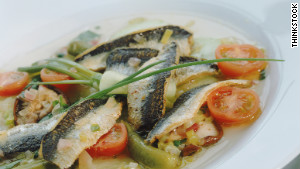
Because herring 
is in abundance in Poland and parts of Scandinavia, and because of their silver coloring, many in those nations eat pickled herring at the stroke of midnight to bring a year of prosperity and bounty. Some eat pickled herring in cream sauce, some have it with onions.

Kransekage, Denmark and Norway
Kransekage, literally wreath cake, is a cake tower composed of many concentric rings of cake layered atop one another, and they are made for New Year's Eve and other special occasions in Denmark and Norway. The cake is made using marzipan, often with a bottle of wine or Aquavit in the center and can be decorated with ornaments, flags and crackers.

Credit:  http://edition.cnn.com/2012/12/28/travel/new-years-food-traditions/index.html

Sunday, December 16, 2012

The Origin of Christmas Carols.


Christmas carols were first introduced in Church by St Francis of Assisi, the Roman Catholic Priest, in Grecchio, Italy in 1223. Before that, carols were sung in homes and other private places as most churches originally considered the singing of carols to be a pagan custom. The carols he lead the congregation in were Bible based, though were not considered hymns.

Some of the first Christmas carols were not written. They were passed on by one person to another verbally. Only during the 14th century carols became a popular religious song form. The theme often revolved around a saint, the Christ child or the Virgin Mary, at times blending two languages such as English and Latin.

By the 15th century the carol was also considered as art music. During this time, elaborate arrangements were made and carols were considered an important contribution to English medieval music. The Fayrfax Manuscript, a court songbook featuring carols, was written by the end of the 15th century. The songs were written for 3 or 4 voices and themes were mostly on the Passion of Christ.

By the 16th century though, the popularity of carols faltered, almost disappearing entirely if not for the revival that happened by the middle of the 18th century. Most of the carols we know today were written during this period. Instead of singing in private places, church choirs began singing Christmas carols with biblical themes as well as the first street carolers began a new Christmas tradition.

A few of the old favorite authors and composers are as listed:

"Silent Night" was written as a poem by Pastor Joseph Mohr on Christmas Eve in 1818. Because the church organ was broken, the church organist, Felix Gruber, wrote music to the words and played a guitar as he, the pastor and church choir sang.

"Joy to the World" was written by Issac Watts as part of his version of Psalm 98. The composer of the music for this carol is not known.
  
Take Care & Happy Holidays......

Credit:  http://musiced.about.com/od/christmasnewyeararticles/a/carols.htm
http://www.helium.com/items/1271462-origin-of-christmas-carols
Photo Credit: http://decor-decors.com/wp-content/uploads/2011/11/Lovely-Christmas-Carols-4.jpg

Sunday, December 9, 2012

Christmas Food Traditions From Around the World !!!!


 Christmas dinner traditions couldn't be more different across the globe. Here's a look at how other cultures celebrate and how you might incorporate their ideas into your own festivities. 
 

United Kingdom
Turkey is the star of Christmas dinner in the United Kingdom — not so different from many tables in the U.S. Classic accompaniments are bread sauce (a thick, textured sauce made with day-old bread) and Christmas pudding.
Pudding — a dense, moist cake made with fruit, spices, nuts and brandy — is steamed for hours and typically made weeks ahead of time. The day it's made is known as Stir-up Sunday, when each family member stirs the batter and makes a wish.

Then, the Christmas pudding is stored away for weeks and allowed to mature. On Christmas day, the pudding is steamed again. When it's time to serve, the pudding is doused in flaming brandy.

Japan
KFC — yep, the fried chicken chain — is the hot place for take-out on Christmas in Japan. It's so popular that the chain lets customers reserve their Christmas party buckets two months in advance. The family-size meal, about $40, has fried chicken, salad and chocolate cake.

Caribbean
No eggnog here. Toast to the holidays with Sorrel punch, a seasonal island drink that gets its bright red color from hibiscus flowers. The flowers and other ingredients like cloves and cinnamon are steeped in water overnight to make an aromatic liquid, which can be combined with rum to make a sweet cocktail.

Italy
On Christmas Eve, Southern Italians celebrate with a dinner called the Feast of the Seven Fishes, which features seven seafood dishes prepared every which way. There is no traditional menu, but there are some popular dishes, including pan-fried smelts, calamari, homemade linguine with clams, baked eel, and baccala, or salt cod.
Why seven dishes? It's unclear, but most explanations point to how the number seven is referenced in the Bible and the Roman Catholic Church. Some families prepare more than seven seafood dishes, with the numbers having religious significance.

France
If you have a sweet tooth, you might want to borrow this tradition from the Provence region: 13 desserts are set out on Christmas Eve. The number of sweets is a nod to Jesus and the Twelve Apostles at the Last Supper.
The desserts vary, and not all are over-the-top concoctions. There are some healthy snacks, like fresh fruits, almonds and raisins, plus sweets like black and white nougat, dates stuffed with marzipan, fudge, an olive oil flatbread, buche de Noel (a Christmas yule log cake) and other pastries.

 Credit: http://www.sheknows.com/food-and-recipes/articles/850815/christmas-food-traditions-from-around-the-world

Sunday, December 2, 2012

Fabulous Fermented Foods !!!!


Probiotics like Idli , dahi, khimichi and dhokla strengthen our immune systems, fight disease and add depth to our culinary experience.Earlier referred to as fermented foods, probiotic foods are valued for their taste as well as nutritional value.

Dahi, paneer, dhoklas, dosas, uttapams, idlis and breads are the mainstay of our kitchens. These foods are not merely tasty, they also offer numerous health  benefits.
While the expression ‘probiotic’ is of recent coinage, it merely refers to food rich in health-enhancing micro-organisms, some of which has been a part of our eating experience since antiquity.

Health Benefits :
The good bacteria in fermented foods consume starch and sugar in our food and arrest the production of lactic acid, which in turn prevent flatulence. Micro-organisms in certain fermented foods strengthen the body’s immune function by supplying B-vitamins, and consuming harmful micro-organisms.

They keep the ecosystem of the digestive tract healthy and prevent colon cancer.  Bacterial enzymes break down milk protein and convert it into yogurt, cheese or kefir, which is easier to digest for many lactose-intolerant people.

However, for probiotic food to benefit us we need a diet rich in soluble fibre from various sources including legumes, oats, barley, onions, sweet potatoes, broccoli and carrots. These foods provide an ideal environment for good bacteria to breed. Prune juice is also a great source of stimulants for friendly bacteria that live inside our bodies.

Content credit: http://www.lifepositive.com/Body/Holistic_Recipes/Fabulous_fermented_foods12012.asp
Image credit:  http://www.expatrecipe.com/2010/11/30/idli/

Sunday, November 25, 2012

How to leverage your youtube music channel


YouTube is the most popular video outlet in the world, and as such, the free service is an integral part of any serious artist’s music marketing strategy. Ignore it at your own peril! Among all the categories of videos found on YouTube, music is far and away the most popular, accounting for nearly 31% of all videos played through the website.So how do you begin to leverage its potential into a plus for your career? Here are six key tips to keep in mind as you go about building your YouTube presence.

1. Provide your viewers with information
The people who discover your videos could already be fans, but they could also have absolutely no idea who you are. The proper information needs to be available to users so that they can become more familiar with your act.Providing relevant links, video descriptions, and additional detailed information provides your viewers with easy access to important data such as the location where they can buy your album or download or share your content with their own personal networks.

2. Talk to your viewers, because they care (or might want to)
Engage with your viewers! Social media is a two way street, so if someone sends you a message or comments on your video, do your best to answer their questions, stir up a conversation, or thank them for the time they spent watching your videos.Ultimately, the more closely connected a fan feels to you as an artist, the more likely they are to watch that video again, post it to Facebook, tweet it, or share it in some other way.

3. Keep the content flowing!
The more engaging content you can post on your channel the better. This includes song videos, behind the scenes footage, tour diaries, etc. Give your fans a reason to stay involved in what you’re doing on your YouTube channel. Film a quick video of your band doing vocal warm ups before a gig, or saying hi to a crowd before you go out on stage.

4. Put yourself behind the eyes of a viewer
Be mindful of how fans and YouTubers are seeing your band’s presence on your channel. DIY bands
hurrying to shovel more content onto their channel often overlook the basics. In addition to
ensuring that your video and audio content is worth broadcasting, be sure the titles of your videos make sense and are informative (Band name/song title/ live performance venue/ etc.). Do your Tags make sense for each video? Are viewers able to get more info about this video if they need it?

5. Promote your YouTube content on your other Social Channels
It may sound obvious to interlink your various digital media channels, but some bands forget to do
this. Use your YouTube videos as content for blog and Facebook posts, tweets, and fodder on your
other social channels. It gives you timely content to broadcast, and it drives views and traffic to your YouTube channel. Engage with fans by sending them a new song they’ve never heard before. If you decide to debut a new song on YouTube, decide on a release date and start promoting the release via all the forms of digital media you use. You can also try a video teaser on your other channels by excerpting a scene or two from a new YouTube release.

6. Customize you YouTube channel
Remember to always:
- Add performer info.
- Add links to descriptions where appropriate.
- Upload your three Album images with buy links to your purchase page. This can be used for anything, so be creative! Don’t forget that you can link to your merch.

Set your channel type to “Musician.” By changing this status within your “Settings,” you can add things like band member info and add “Events” for things like shows or new releases.

Making the most of your YouTube channel requires you to spend some time learning what is working for other bands and what works best for your audience. Be sure you speak with and listen to your fans using social media and YouTube, as they will help guide you to build a channel that is engaging and effective.

source:discmakers.com

Saturday, November 10, 2012

Musicians and Repetitive Strain Injuries (RSI) — How to Practice Hard and Stay Healthy

Have you ever heard serious musicians likened to competitive athletes? It’s a worthy comparison in many ways. Just like world-class swimmers or football players, dedicated musicians spend years training, honing their technique, and practicing hours a week so when the time comes, their skills are sharp and their focus is tight. And, just like athletes, musicians can get injured doing what they love.

For many musicians, physical problems come in the form of repetitive stress injuries (RSIs). Resulting from improper technique, over-exertion, or just bad luck, RSIs can often start as a stray ache or pain, and if not dealt with correctly, can get worse and become debilitating. If you come to this article already experiencing discomfort while playing your instrument, though, fear not. A great majority of music-related injuries can be treated with proper care.

Here is how you can keep yourself playing music in a healthy way for years to come.These tips are from David S. Weiss MD is a Clinical Associate Professor of Orthopaedic Surgery at New York University School of Medicine.

Pay attention to your body and Take break
The major mistake musicians make is that they don’t listen to their bodies and their arms," says Dr. Weiss. "Even if you’re not feeling pain, if your arms feel tired and heavy, take note, and take a break. It’s the same as walking – if I walk for four hours on cobblestone streets, my calves might not exactly hurt, but they’d likely feel tight and overused. That’s when it’s time to stop and take a rest – before the pain starts."

Take a lesson
Even if you’re a completely self-taught musician, if you start feeling symptoms of overuse, consider investing in a lesson or two with an experienced, trained teacher.

Treat yourself like an athlete
Just like athletes, musicians use their bodies for their livelihood. Musicians should understand that their sound isn’t coming just out of their instruments," says Dr. Weiss. "The sound comes from the neck, shoulders, and arms, and then from the instrument. Often, musicians will divorce themselves from the physical aspect of playing and ignore the fact there’s a body between their creativity and their instruments."

Exercise away from your instrument
Keeping your entire body strong and flexible can go a long way towards ensuring that you’ll be able to play music for decades, says Dr. Weiss. "Cross-training and aerobic exercises are good. Even walking briskly – with good posture, and not slouching – can be great. Using an elliptical machine, swimming, jogging, and biking are good, too. You want to work up a sweat and use your muscles, but not in the fine-tuning way that you use them when you play an instrument."

Know when to see a doctor
"If there’s actual pain that interferes with your playing, seek medical attention," advises Dr.Weiss. Simple advice – but also remember to be diligent, even once you enter the examination room. "Be aware that a lot of physicians don’t know a lot about musicians and may want to tell you to keep playing, but just take anti-inflammatory medicine."

While such treatments can help in the short term, if there’s a greater issue with your technique or lifestyle that’s causing you problems with your instrument, no number of pills will fix what’s wrong. "You have to think about what a doctor’s advice means," he says. "You don’t just want to be covering up the pain. Painkillers can mask symptoms."

source:http://blog.discmakers.com